
Platform
A simulation core with an AI decision layer
The Open Netrikkan platform adds a four-agent AI layer on top of a conventional discrete event simulation engine — so planners get a ranked recommendation, not a chart.
Discrete event simulation, made usable
DES models a plant as things that happen at moments in time: an order arrives, a machine starts a job, a changeover finishes, a truck docks. The model advances event by event, tracking queues, utilisation and delay — and because it draws random variation from real data, it shows the range of outcomes a plan may produce, not a single average.
A machine that averages 85% utilisation on paper still queues jobs when arrivals bunch up. Spreadsheets and static capacity calculators cannot see that. Simulation can.
↻ closed loop until improvement flattens
Capabilities
Built for real planning decisions
Fast to configure
Data arrives as the spreadsheets, PDFs and drawings a plant already holds; document extraction converts them into simulation inputs. A first model does not wait on an integration project.
Scenario comparison
Save, compare and re-run scenarios side by side. Every run is reproducible and explainable.
Data stays put
Language models run locally, so operational data need not leave the customer’s environment.
Additive to your stack
Designed to sit beside SAP, Siemens Opcenter and equivalent MES/WMS systems — never to replace them.
Ask about the schedule
Plain-language questions answered from the schedule’s own numbers, so figures always match the charts.
Reports and exports
Excel, JSON, PowerPoint and PDF exports for offline review or ERP hand-off.
Roles and access
Plant head, planner, viewer, sales and RFP-prep roles — each with exactly the access they need.
Gain-share pricing
Pay for results: audited baseline, agreed utilisation definition, joint measurement committee and a monthly floor fee.
Deployment
Start with the decision that costs the most today
Durations are indicative and depend on data readiness.
Modules
Nine engines on one core
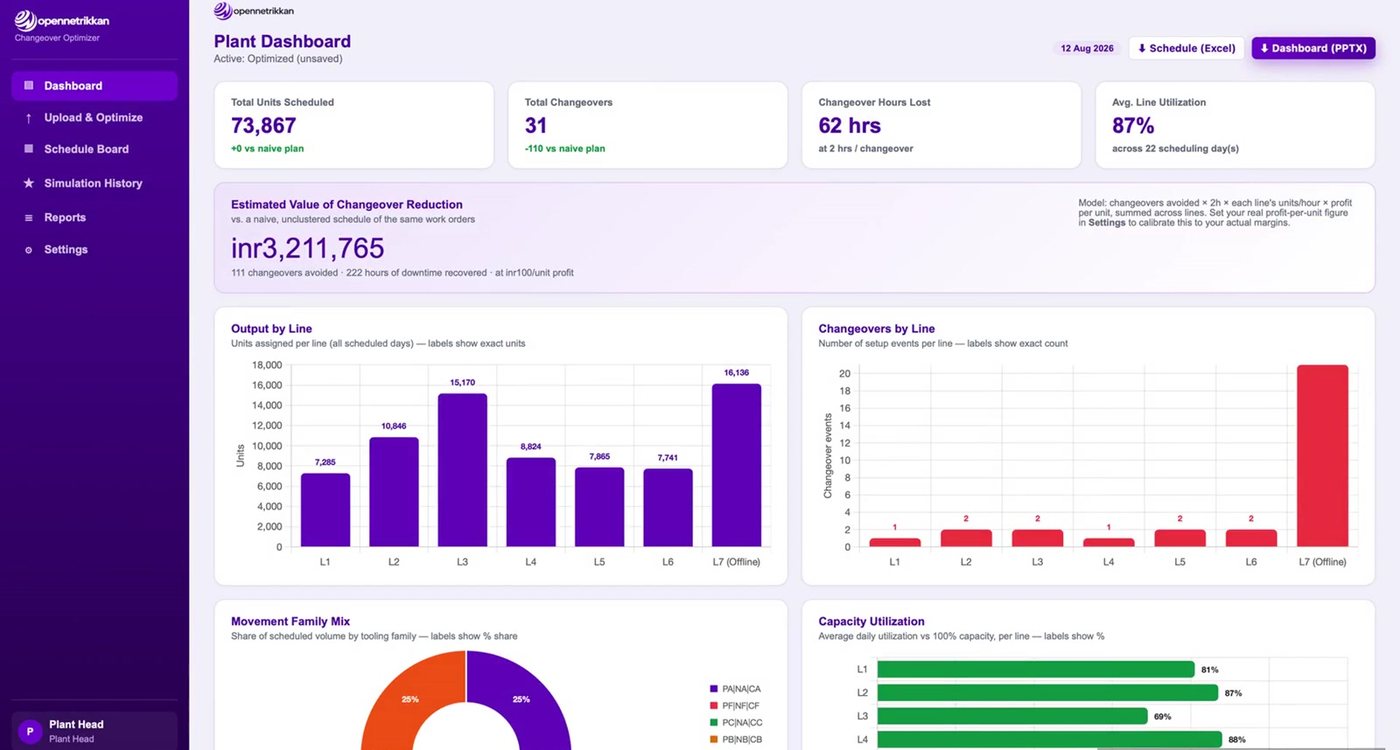 01
01Changeover Optimizer
Which sequence of work orders cuts changeover time this week?
Available moduleExplore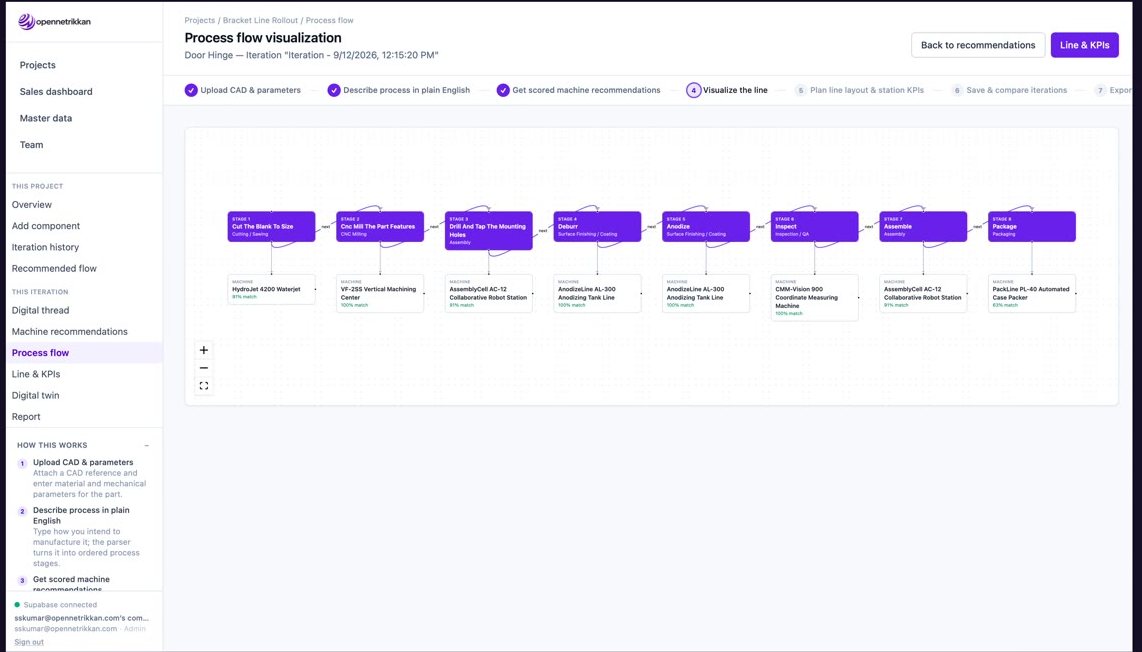 02
02Newline
Which equipment and layout does a new component line need?
Available moduleExplore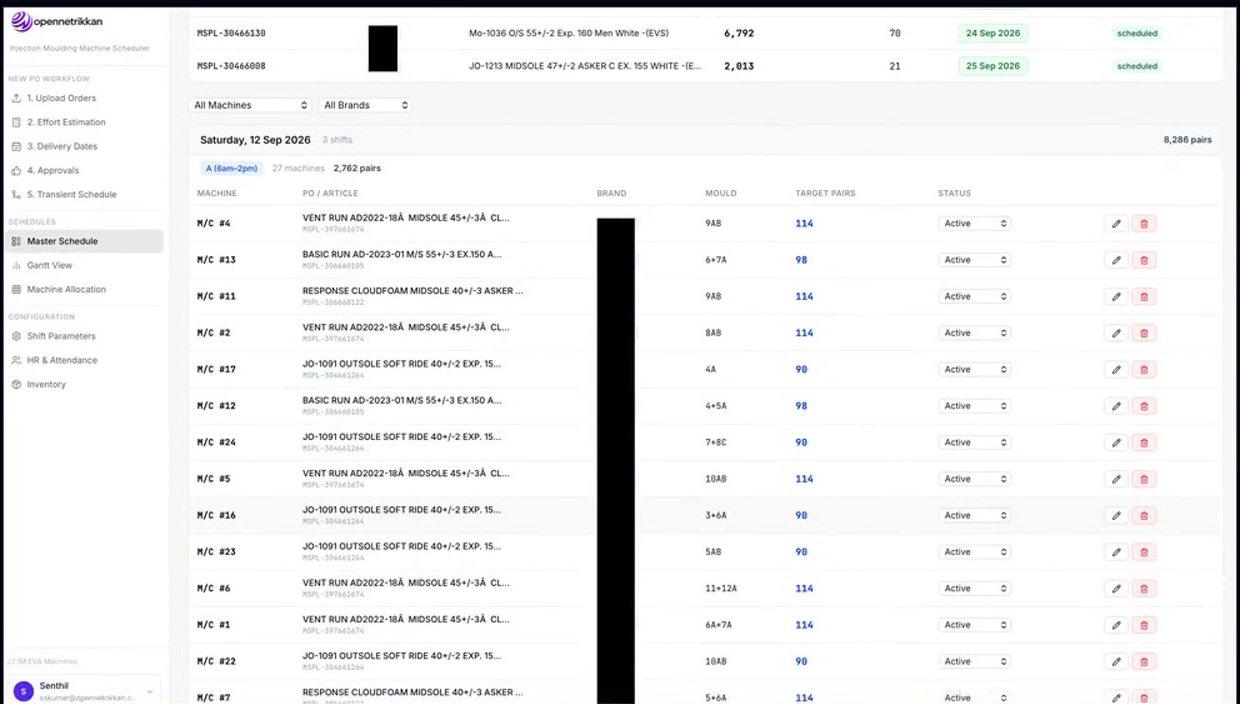 03
03Machine Bank Scheduler
Which job runs on which machine in the bank, on which shift?
Available moduleExploreSee it against your own numbers
A 30-minute working session: you nominate the planning decision that hurts most, and we run the closest tool against a representative case from your operation.